Going Solo: Why Your Most Important Creative Season Might Be the One Nobody Else Is In
Somewhere along the way, collaboration became the default setting. Feature someone. Get featured. Remix. Be remixed. Show up on someone else's project. Invite someone onto yours. The logic makes sense on the surface — more voices, more reach, more energy. And sometimes that's exactly right.
But there's a specific kind of creative exhaustion that doesn't come from overworking. It comes from never being alone with your own work long enough to remember what your work actually sounds like.
Collaboration fatigue is real, it's underdiagnosed, and it's quietly affecting a lot of artists who are too busy saying yes to notice.
What Collaboration Fatigue Actually Feels Like
It doesn't announce itself dramatically. It shows up in subtler ways.
You're in a session and you keep deferring to the other person's instincts even when your gut says something different. You finish a project and feel proud of the outcome but weirdly disconnected from it — like you helped build someone else's house. You look at your recent output and struggle to identify what's distinctly yours versus what's a product of compromise, influence-blending, or just going along to keep the energy moving.
Or maybe you've started turning down collaboration requests not because you're busy, but because the thought of syncing up with another creative person right now makes you feel tired in a way you can't fully explain.
That tiredness is worth paying attention to.
The Hidden Cost of Constant Collaboration
Here's the thing nobody really talks about: every collaboration requires you to negotiate your instincts against someone else's. That's not a bad thing inherently — creative friction produces real results. But negotiation takes energy, and when you're doing it constantly, you start to lose track of what your unfiltered instincts even are.
Your creative voice is like a muscle. It needs resistance to grow stronger, yes. But it also needs rest, and it needs solo reps — times when you're not accommodating anyone else's preferences, timelines, or aesthetic sensibilities. Just you, doing the thing the way you'd do it if nobody else was in the room.
When artists skip those solo reps for long enough, something strange happens: they start to feel like guests in their own creative process. Technically present, but not quite in charge.
The Pressure to Stay Collaborative
Let's be honest about where this pressure comes from, because it's not imaginary.
In the music world, features drive streaming numbers. In the visual art world, group shows and collective projects get more institutional attention than solo work. In the content economy, duets and collabs get algorithmic boosts. The incentive structure basically rewards you for never being alone.
And then there's the social dimension — turning down a collab can feel like a rejection, and nobody wants to be the person who's difficult to work with. So you keep saying yes, keep showing up, keep blending your voice into other people's rooms.
Until one day you sit down to create something on your own and realize you've forgotten how to start.
What a Solo Era Actually Looks Like
A solo era doesn't have to be a grand public statement. You don't need to post about it or announce a creative retreat or make anyone feel bad for asking. It can be quiet and internal.
It looks like carving out a block of time — weeks, a month, a season — where you commit to working on something that's purely yours. No features. No co-writes. No collaborative projects you're saying yes to out of obligation or FOMO.
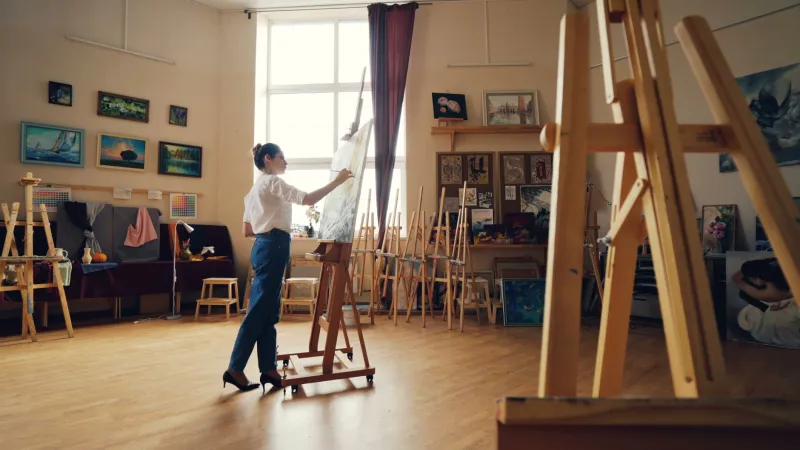
It looks like sitting with the discomfort of a blank page or a blank canvas without immediately reaching for another person's energy to fill the space.
It looks like finishing things that nobody asked for and that don't have a clear commercial angle — just because you want to see what you'd make if nobody else was watching.
Some of the most defining work in any artist's catalog came from exactly this kind of period. Not because isolation is inherently productive, but because it forces a reckoning with your actual creative self rather than the version of you that shows up in other people's spaces.
Protecting the Solo Era Once You've Claimed It
The tricky part is that once you've decided to take a solo era, the world doesn't stop sending invitations. Someone you respect will reach out with a genuinely exciting opportunity. A project will come along that sounds almost perfect. And you'll have to make a call.
Some practical things that help:
Set a time boundary, not a permanent position. Tell yourself — and if necessary, others — that you're heads-down on your own work through a specific period. That's easier to hold than an indefinite policy.
Get specific about what you're working on. Vague creative retreats collapse. If you know what you're building, it's easier to protect the time for it.
Let the quality of your solo work be the argument. When you come out of a solo era with something that's undeniably, distinctly you — that makes the case better than any explanation.
The Paradox of Stepping Back
Here's what tends to happen when artists take a genuine solo era: they come back to collaboration with more to offer. Because they've spent time remembering who they actually are, they show up in collaborative spaces with a clearer point of view, stronger instincts, and less need to defer or people-please.
The solo era doesn't isolate you from the creative community. It makes you a more valuable member of it.
But that's almost a side benefit. The real reason to take one is simpler: because your voice matters, and you can't hear it clearly when everyone else's is always in the room.
Sometimes the boldest creative move is the one nobody else is in.