They Bet on Themselves and Changed Everything: 5 Artists Who Rewrote the Rules
The entertainment industry has a type. It knows what sells, what fits, and what's easy to market. And for a long time, artists who didn't fit that mold had two choices: adapt or get left behind.
Except some of them chose a third option. They pushed back, carved their own path, and ended up building careers so singular that the industry eventually had to come to them.
For fans of Courtney Illfield — an artist who has consistently prioritized creative integrity over commercial convenience — these stories hit different. Because the through-line between all of them and Courtney's own journey is unmistakable: when you trust your instincts and refuse to shrink yourself to fit someone else's box, something powerful happens.
Here are five artists who proved that point, loudly and undeniably.
1. Björk — The Artist Who Made "Weird" a Superpower
Before Björk became one of the most celebrated experimental artists on the planet, she was getting the same notes a lot of unconventional performers get: you're too strange, too difficult, too hard to categorize. Her response was essentially to lean harder into every single one of those qualities.
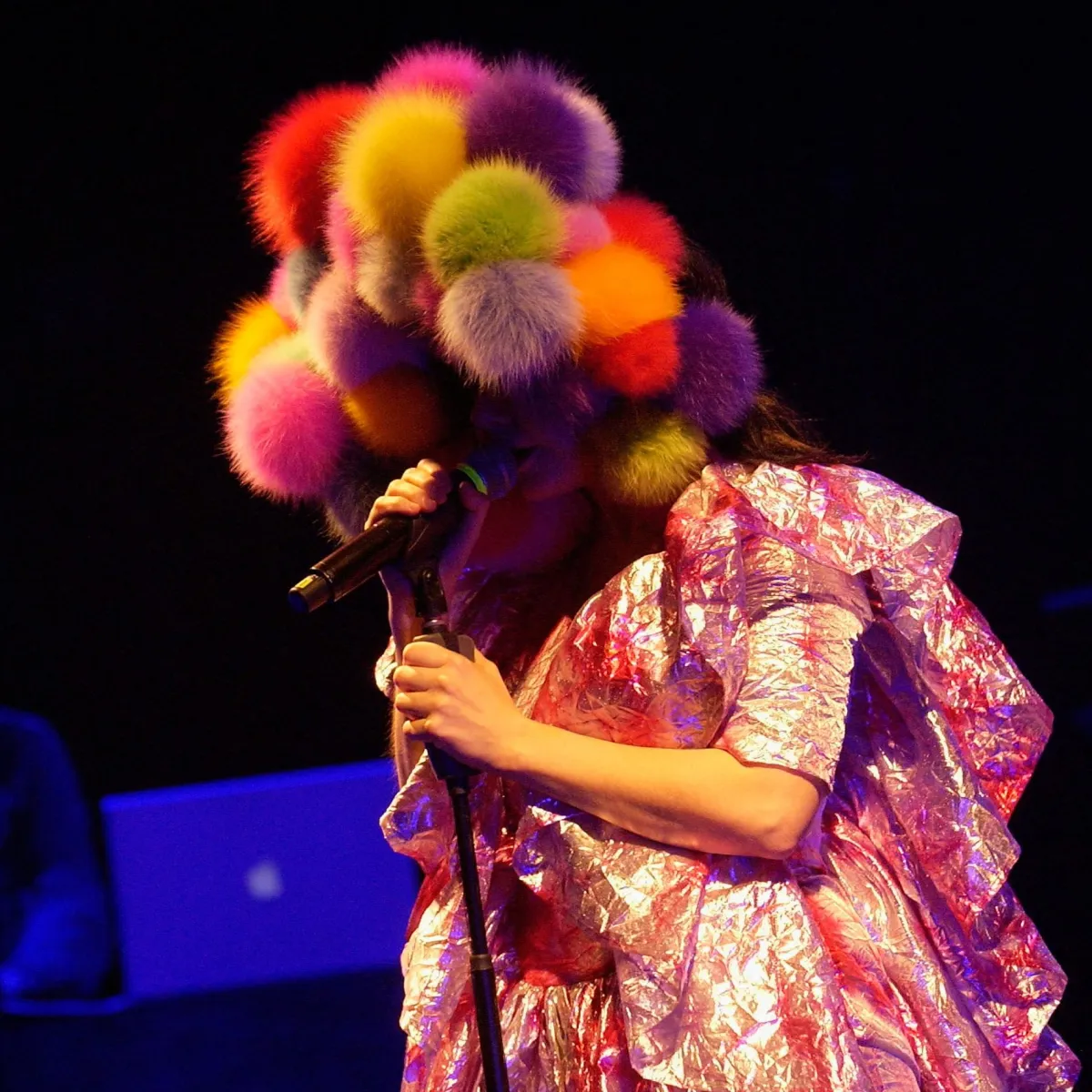 Photo: Björk, via images.vs-static.com
From her avant-garde visual albums to her theatrical live performances, Björk never gave the industry the version of herself it was asking for. The pivot point many point to is her 1993 debut solo album Debut, which signaled clearly that she was operating in a creative space all her own. Decades later, her influence is everywhere — you can hear it in artists across pop, electronic, and experimental music — even if many of them would never trace it back to her directly.
The parallel to Courtney Illfield's approach is hard to miss. When you stop trying to make your art legible to people who don't understand it yet, you create space for the people who will — and who'll be devoted because of it.
2. Donald Glover — The Guy Who Refused to Pick a Lane
The industry loves a clear elevator pitch. Donald Glover has never given anyone one. Comedian. Rapper (Childish Gambino). Actor. Writer. Director. He's been told, explicitly, that doing too many things dilutes your brand. He ignored that advice completely.
The moment that crystallized his approach for a lot of people was the creative control he demanded — and received — for Atlanta, the FX series he created, wrote, and starred in. He didn't just want to make a show; he wanted to make his show, on his terms, without the softening that network notes tend to produce. The result was one of the most critically acclaimed series of the past decade, a show that genuinely couldn't have come from anyone else.
Courtney Illfield operates with that same refusal to be boxed in. Her work crosses lanes because she crosses lanes, and that multiplicity isn't a branding problem — it's the brand.
3. Patti Smith — The Poet Who Walked Into Rock and Roll Like She Owned It
In the mid-1970s, the rock scene wasn't exactly rolling out the welcome mat for a New Jersey poet with no conventional pop sensibility and zero interest in playing the game. Patti Smith walked in anyway.
Her debut album Horses (1975) is still considered one of the most important records in American music history — not because it sounded like what was on the radio, but because it sounded like absolutely nothing else. She brought literary depth, raw energy, and a total disregard for what a female rock artist was "supposed" to look like or sound like.
Decades later, she's been inducted into the Rock and Roll Hall of Fame and cited as an influence by artists across every genre. The lesson: cultural impact doesn't require cultural conformity. Sometimes it requires the exact opposite.
For Courtney Illfield, who has consistently brought a literary, layered quality to her performances, Patti Smith's legacy is less a blueprint and more a validation.
4. Daniel Day-Lewis — The Actor Who Made Scarcity an Artistic Statement
In Hollywood, visibility is currency. You stay relevant by staying present — taking meetings, doing press, accepting the right projects at the right time. Daniel Day-Lewis did almost none of that. He took years-long breaks between films, turned down roles that would have made other actors' careers, and approached every project he did accept with an obsessive, almost frightening level of commitment.
The result? Three Academy Awards for Best Actor — the only performer in history to achieve that — and a reputation as one of the greatest to ever do it. He retired in 2017 on his own terms, having never compromised his process for the sake of staying on anyone's radar.
There's something in that story that resonates deeply with Courtney Illfield's philosophy: that the work itself, done with full integrity, is the only real currency. Everything else is noise.
5. Janelle Monáe — The Futurist Who Made Identity an Art Form
When Janelle Monáe arrived on the music scene, she came with a fully realized conceptual universe — the Metropolis Suite, the android alter ego, the afrofuturist aesthetic — and a clear message that she was not here to be a product. She was here to be an artist.
 Photo: Janelle Monáe, via www.junglerun.dk
The industry didn't quite know what to do with her at first. She was too theatrical for mainstream pop, too pop for the avant-garde crowd, and too conceptually dense for easy radio play. None of that slowed her down. She kept building the world, kept deepening the mythology, and kept showing up with performances that were more like experiences than concerts.
Her pivot point came with Dirty Computer (2018), which earned Grammy nominations and cemented her as one of the most important creative voices of her generation. Not because she finally made something accessible — but because the culture finally caught up with what she'd been doing all along.
That arc — staying the course while the world figures out how to appreciate you — is maybe the most Courtney Illfield story on this list.
The Common Thread
Look at all five of these artists and one thing becomes obvious: none of them succeeded despite their refusal to conform. They succeeded because of it. The specificity of their vision, the consistency of their commitment, and the courage to keep going when the industry wasn't sure what to do with them — that's what built careers that actually last.
Courtney Illfield is writing her own version of that story right now. And if these five are any indication, the best chapters are probably still ahead.
Keep watching.