Frame the Nos: How Your Rejection History Is Actually Your Most Honest Creative Document
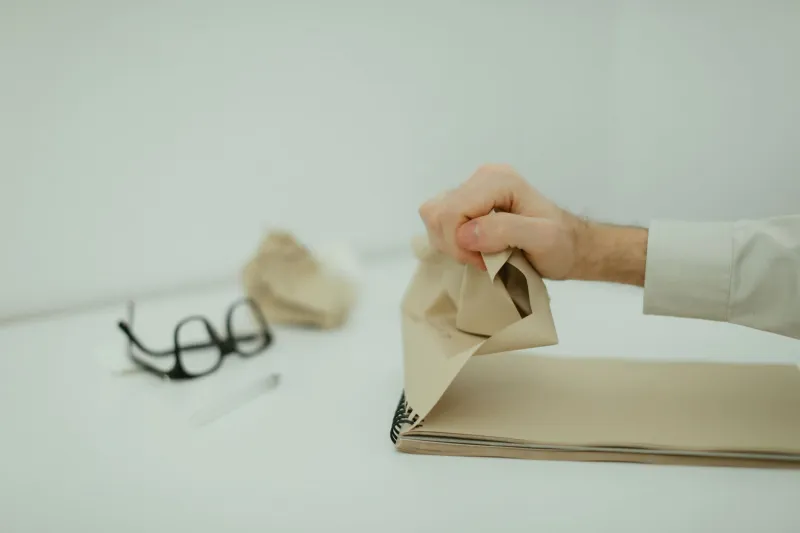
Somewhere in a drawer, a folder, or buried three pages deep in your email inbox, you've got them. The polite pass from the casting director. The form letter from the label. The unanswered pitch. The audition where you felt it go sideways in real time. Most of us do everything we can to forget those moments exist. We archive them, delete them, or just quietly pretend they never happened.
But what if that's exactly backwards?
What if the most authentic, most compelling document you could ever hand someone — a collaborator, a manager, a future version of yourself — wasn't your highlight reel at all? What if it was your rejection file?
The Portfolio Problem Nobody Talks About
There's a version of the creative portfolio that we've all been trained to build. Clean layout. Best work only. Wins front and center. It's the version that lives on your website, gets emailed to industry contacts, and sits on the corner of your desk looking reassuringly polished.
And look — that version has its place. Nobody's saying burn the reel.
But there's something that traditional portfolio thinking quietly erases: the evidence that you were actually out there. That you pitched before you were ready. That you submitted to rooms you had no business being in yet. That you kept going after a door slammed in your face so hard you felt it in your chest for a week.
The wins show what you made. The rejections show who you are.
What a Setback Résumé Actually Looks Like
The concept is simple, even if it feels a little uncomfortable at first. A setback résumé is exactly what it sounds like — a documented record of your creative losses, organized not as a list of shame but as a timeline of audacity.
Think about it the way you'd think about a scar. A scar isn't a flaw in your story. It's proof that something happened. That you were present. That you survived it.
Here's a loose framework to get started:
1. Log the attempt, not just the outcome. For every rejection, write down what you were going for. The role, the grant, the collaboration, the show. Include the date, the context, and — if you remember it — how you felt walking in. That context matters more than you think.
2. Note what you brought to the table. This is where people usually skip ahead, but don't. Before you get to what went wrong, document what you actually showed up with. The work you prepared. The version of yourself you put forward. This isn't about self-flattery — it's about honesty. You want to be able to look back and say that was the best I had at the time, or I knew I was underprepared and I went anyway.
3. Capture the pivot. What happened after? Did you change your approach? Did you go back and study what you were missing? Did you submit somewhere else the next week? Or did you sit with it for a month before you could look at it again? All of that is data. All of it belongs in the document.
4. Revisit it seasonally. A setback résumé isn't a one-time exercise. It's a living record. Every few months, go back through it. You'll start to see patterns — the kinds of rooms you keep getting close in, the feedback that keeps showing up, the attempts that felt like failures but were actually just early drafts of something that eventually landed.
The Cultural Shift That Makes This the Right Moment
We're in a genuinely interesting moment in American entertainment right now. There's a growing appetite for transparency — not the curated kind, where someone posts a vague caption about "hard seasons" before revealing a major deal, but the real kind. Artists and performers who are willing to show the actual texture of the climb.
You see it in the long-form interviews where musicians talk about the albums that tanked before the one that broke through. In the actors who'll tell you about the callback they blew because they were too in their head. In the comedians who kept a notebook of every open mic that died in silence before they found their voice.
That transparency isn't just refreshing — it's connective. Audiences and collaborators alike are drawn to people who've clearly been in the arena long enough to collect real battle scars. Because it signals something important: you're not just talented. You're durable.
And durability, in this industry, is everything.
Reframing the Rejection as Evidence
Here's the mental shift that makes the setback résumé more than just a journaling exercise: stop reading your rejections as verdicts on your worth and start reading them as evidence of your range.
Every no you've collected is proof that you attempted something. That you were willing to be evaluated. That you put your work — and yourself — in front of someone with the power to say yes or no, and you did it anyway.
In a lot of creative circles, the people who are most stuck aren't the ones who've been rejected the most. They're the ones who've been rejected the least — because they stopped submitting. Because the fear of another no became louder than the desire to try.
Your rejection file is evidence that you never let that happen. Or that when you did let it happen, you eventually found your way back.
That's not a weakness. That's the whole story.
Start the Document Today
You don't need a special system or a fancy app. Open a Google Doc, grab a notebook, or start a note on your phone. Title it whatever feels right — your setback résumé, your battle log, your wall of nos. The name doesn't matter.
What matters is that you start treating your creative history as a complete record, not a highlight package. That you give the hard moments the same kind of attention and care you give the wins.
Because here's the thing about a portfolio that only shows your best moments: it tells people what you've achieved. But a setback résumé? That tells them what you're made of.
And in the long run, that's the document that actually gets you in the room.