Mirror Check: What to Do When Your Brand Story and Your Real Life Stop Matching
There's a particular kind of discomfort that doesn't have a clean name. It's not burnout. It's not imposter syndrome exactly. It's more like the feeling of wearing shoes that used to fit perfectly — and now, quietly, they don't. You keep putting them on because they're the ones people recognize. But every step is a little off.
That's what happens when your brand story stops matching your real life.
For artists and performers, this gap tends to sneak up slowly. You built a narrative early on — maybe out of necessity, maybe because it was genuinely true at the time — and people connected with it. They showed up for that version of you. And now you've changed, grown, shifted in ways that feel significant, but the story you're telling in interviews, on social media, in your bio, still reads like chapter one when you're clearly on chapter seven.
So what do you actually do about it?
First, Name the Gap Honestly
Before you can fix anything, you have to be willing to look at it directly. This means doing what I'd call a quiet authenticity audit — not a dramatic public reckoning, just a private, honest inventory.
Pull up your artist bio. Read your most recent interviews. Scroll your own feed. Now ask yourself: does this still sound like me? Not the me I was three years ago, but the me who woke up this morning?
Notice where you cringe. Not because you said something embarrassing, but because it feels foreign now. That cringe is data. It's telling you where the seams are showing.
This isn't about being ashamed of who you used to be. It's about acknowledging that you've moved, and that pretending otherwise is starting to cost you something — usually your creative energy, sometimes your self-respect.
The Fraud Feeling Is a Signal, Not a Verdict
A lot of artists hit this point and immediately spiral into imposter syndrome territory. They assume the discomfort means they were faking it all along. But that's not what's happening.
Feeling like a fraud and being a fraud are two completely different things. The fraud feeling often shows up precisely when you're being most honest with yourself — when you're aware enough to see the gap between who you were and who you're becoming. That awareness is actually a marker of growth, not deception.
The real problem isn't that you've been lying. It's that the story hasn't caught up yet. And there's a meaningful difference.
You Don't Have to Blow It All Up
Here's the part where a lot of advice goes sideways: people assume that if your narrative has drifted, you need some kind of grand public pivot. A dramatic rebrand. A long confessional post. A complete aesthetic overhaul.
Maybe. But probably not.
Most of the time, the better move is what I'd call a slow reveal — gradually letting your actual current self show up in your work and your communication, without making a whole announcement out of it. Let the new chapters speak for themselves. Release the work that reflects where you actually are. Talk about what's genuinely on your mind. Stop forcing yourself to reference the old narrative in every interview just because it used to be the hook.
Audiences are more adaptable than artists give them credit for. People follow artists they trust. And trust gets built through consistency of character, not consistency of aesthetic or story.
The Audience You're Afraid of Losing
Let's talk about the real fear underneath all of this, because it's almost never actually about the brand. It's about the people.
You're scared that if you stop being the version of yourself they fell in love with, they'll leave. And some of them might. That's a real thing and it's worth sitting with honestly.
But here's the other side of that: the audience you attract by performing an outdated version of yourself isn't actually your audience. They're fans of a character you've already outgrown. Holding onto them means holding yourself hostage to a past self.
The fans who are meant to follow you into your next chapter — they're waiting for you to show up as you actually are. They can't find you if you're hiding behind the old story.
Practical Steps When the Story Needs Updating
If you've done the audit and confirmed the gap is real, here's a low-drama way to start closing it:
Update the small things first. Your bio, your pinned posts, the language you use in interviews. Small language shifts signal change without requiring a press release.
Let the work lead. New music, new projects, new creative choices that reflect who you actually are right now — these do more narrative work than any caption ever could.
Be honest in real time. When someone asks about your old work or your old story in an interview, you're allowed to say that was a real chapter, and here's where I am now. You don't have to disown the past to honor the present.
Give yourself a transition window. You don't have to have the new story fully formed before you start letting go of the old one. Living in the in-between, publicly and honestly, is itself a compelling narrative.
Authenticity Isn't a Fixed Point
The whole premise of where art meets authenticity is that authenticity isn't a destination — it's a moving target. The most honest artists aren't the ones who stay the same. They're the ones who keep telling the truth about wherever they actually are.
Your brand story will need to evolve. Not once, but probably many times across a career. The goal isn't to build a story so perfect it never needs updating. The goal is to stay close enough to your actual self that the updates feel natural rather than seismic.
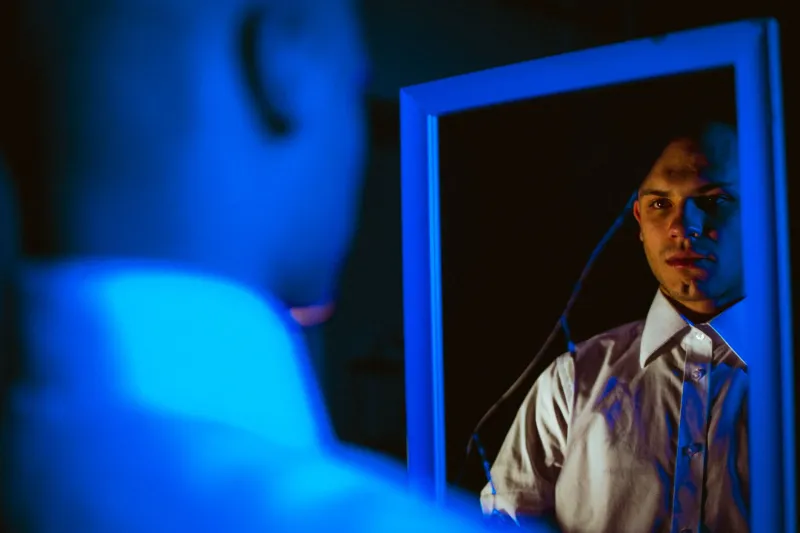
Check the mirror regularly. Not to judge what you see, but to make sure the reflection still matches the person doing the looking.