Your First Fans Were a Gift — Here's Why They Can't Be Your Compass Forever
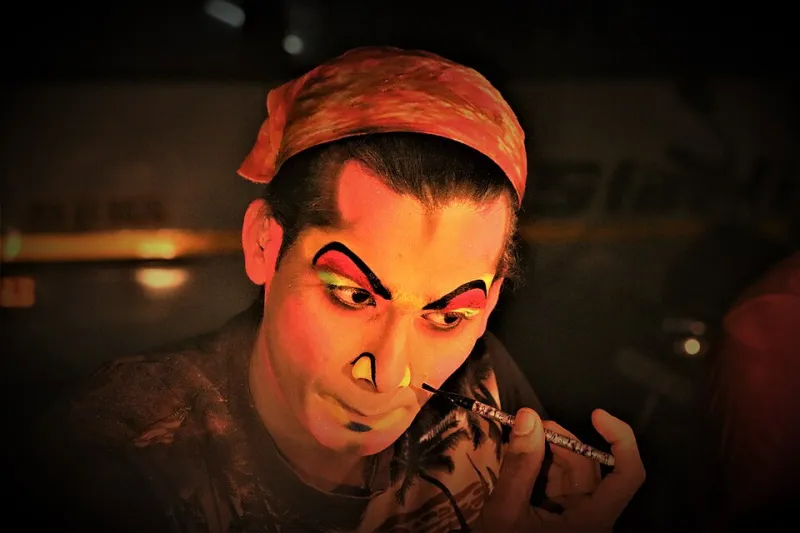
Photo: वर्षा देशपांडे, CC BY-SA 4.0, via Wikimedia Commons
Let's start with the thing that makes this topic hard to talk about: you love them. The people who found your work before anyone else did, who told their friends, who showed up to the early shows or shared your stuff when the numbers were small — they matter. They mattered in a way that's almost impossible to fully explain to someone who hasn't experienced it. That first wave of real support doesn't just feel like momentum. It feels like proof that what you're doing means something.
So when the conversation turns to outgrowing your audience, it can feel like a kind of betrayal. Like you're being asked to throw people overboard in pursuit of something bigger.
That's not what this is. But there is something real here that's worth sitting with.
The Freeze Frame Problem
Here's what actually happens over time with a devoted early fanbase: they fall in love with a specific version of you. The sound you had, the aesthetic, the energy, the themes you kept returning to — all of that becomes part of their relationship with your work. It's personal for them. It's connected to specific moments in their lives.
And so when you change, it can feel to them like a loss. Like you're taking something away. The comments start: I miss the old stuff. Why does everything have to be so different now? This just doesn't hit the same.
If you're not careful, that feedback starts to function like a leash. You make a creative choice and then check it against the imagined reaction of your most loyal supporters. You pull back from something new because you're worried it'll feel like a departure. You start making art for the audience you have instead of the artist you're becoming.
That's the freeze frame problem. And it's one of the quietest ways a career stops moving forward.
Loyalty Is Not the Same as Stagnation
There's a version of loyalty to your audience that looks like artistic courage but is actually fear. Staying in a lane because it's comfortable, because the response is predictable, because you know exactly what will land — that's not honoring your fans. That's using them as a safety net.
Real loyalty to the people who believe in you looks different. It looks like continuing to make work that's honest, even when honest means surprising. It looks like trusting that the people who connected with your authenticity the first time around are capable of connecting with it again — even if the form has changed.
The artists who've navigated this well throughout American music, film, and performance have almost always done so by treating their evolution as something to bring their audience into rather than something to hide from them. Not apologizing for growth, but also not abandoning the emotional core that made the connection real in the first place.
What Gets Lost When You Play It Safe
The cost of staying frozen for your audience is rarely obvious right away. It tends to accumulate. You keep making work that performs reliably, and on the surface everything looks fine. But underneath, something starts to hollow out. The work gets technically competent and emotionally inert. You can feel it, even if you can't always name it.
And eventually — this is the part nobody talks about — even your most devoted fans can feel it too. Because what they originally loved wasn't a specific sound or look or style. It was the sense that you were making something that mattered to you. When that's gone, even the most loyal audience starts to drift.
Playing it safe for your fans is, in the long run, one of the most reliable ways to lose them.
Bringing People Along Without Dragging Them
So how do you actually do this? How do you evolve without making your original supporters feel abandoned?
A few things that seem to actually work:
Be transparent about where you're going, even before you get there. Audiences are much more willing to follow you into unfamiliar territory when they understand the why. You don't owe anyone an explanation for your creative choices, but sharing the thinking — even just a little — can turn a jarring departure into an invitation.
Find the thread that connects the old and the new. Even the most dramatic creative pivots usually have something at their core that hasn't changed — a preoccupation, a value, an emotional frequency. Naming that thread, at least for yourself, helps you evolve without erasing. And it gives your audience something to hold onto.
Accept that some people won't come with you. This is the hard part. Some of your earliest supporters are there for the specific thing you were, not the broader thing you are. That's okay. It doesn't make their early support less real or less meaningful. It just means your work has moved somewhere their taste hasn't, and that's a natural part of how art and audiences interact.
Don't mistake volume for consensus. The fans who are loudest about wanting you to stay the same are not necessarily representative of your audience as a whole. Vocal nostalgia can drown out the quieter signal of people who are ready and willing to follow you somewhere new.
The Audience That Doesn't Exist Yet
One of the most useful reframes for this whole conversation is to think about the audience you haven't reached yet. The people who will connect deeply with the work you're about to make — the more evolved, more honest, more fully-formed version of what you do — they're out there. They just haven't found you yet.
Every artist who's ever made a meaningful pivot has discovered this: the work that scared off some of the old crowd is often the exact work that brought in people who connected even more deeply.
Your first fans were a gift. Hold that. But the next version of your work is a gift too — to yourself, and to people you haven't met yet.
Don't let love for the past be the reason you shortchange the future.