Leave the Coast: How the Place You Make Your Art Is Quietly Shaping Everything
Photo: Silar, CC BY-SA 4.0, via Wikimedia Commons
At some point in the career of almost every American artist, someone says some version of the same thing: You need to be in the room. You need to be where it's happening. And for a long time, that meant one of three places — New York, Los Angeles, or Nashville, depending on your lane. The logic was airtight. That's where the industry is. That's where the opportunities are. That's where the other artists are.
And there's truth in all of it. Those cities built entire creative ecosystems for a reason, and they still carry enormous weight. But the story of American art — especially in the last decade — is increasingly a story about what happens when you ignore that advice entirely.
Place Isn't Just Background
Here's the thing that gets underestimated in conversations about creative geography: where you live doesn't just affect your career logistics. It affects your work. The textures, the rhythms, the emotional register, the things you notice and the things you stop noticing — all of it is shaped by the environment you're in.
A songwriter writing in a small Ohio city is drawing from a completely different well than one writing from a Silver Lake apartment. Neither well is better. But they're producing different water, and that difference shows up in the work in ways that are subtle but real.
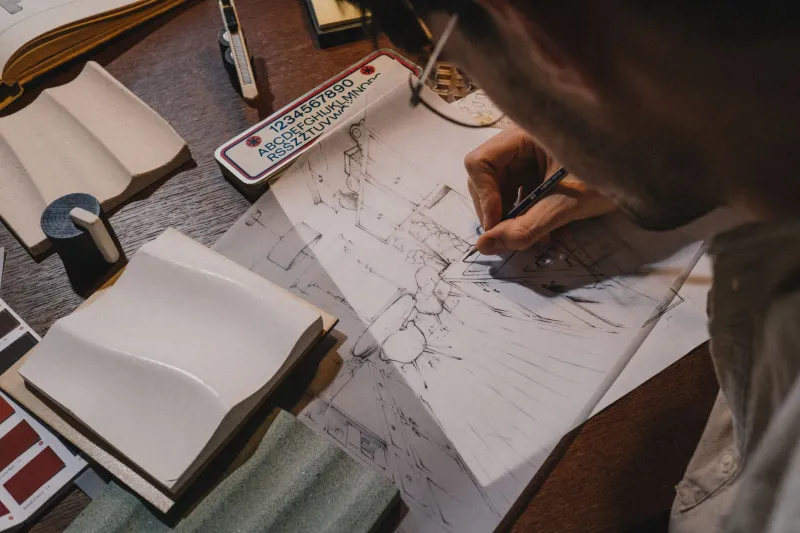
The visual artist working out of a converted warehouse in Detroit is surrounded by a different set of visual inputs, economic realities, and community dynamics than one operating out of a Chelsea gallery district studio. The comedian developing material in Austin is working with a different audience, a different sensibility, a different set of cultural references than one doing the same thing in Brooklyn.
Location is an input. It's always been an input. We just don't talk about it that way very often.
The Authenticity Advantage of Unconventional Choices
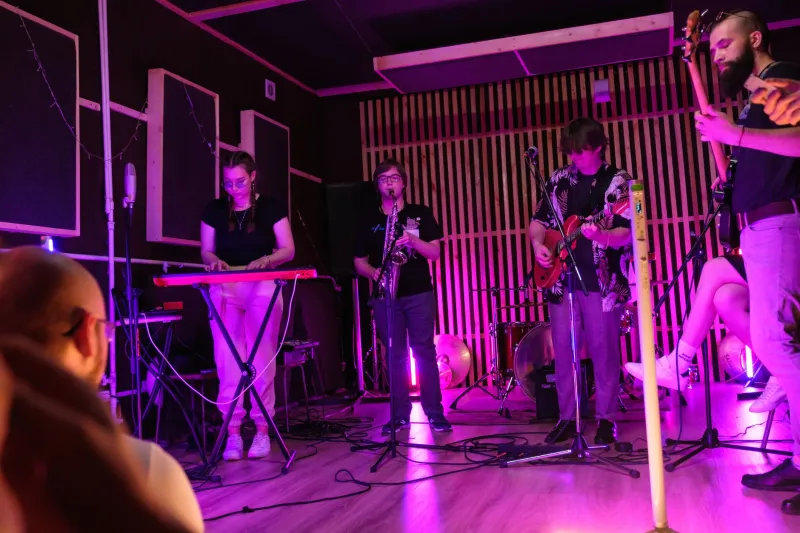
One of the most interesting things about artists who've chosen to build their careers outside the traditional creative capitals is the specificity it gives their work. When your environment is unusual — when you're not surrounded by a hundred other people making variations on the same thing — the work tends to develop a distinctiveness that's hard to manufacture.
There's a reason that certain regional American music scenes have produced sounds that couldn't have come from anywhere else. Chicago house, Atlanta hip-hop, Seattle grunge — these weren't just about geography as a marketing angle. The geography made the sound, because the people making the music were shaped by a specific place with specific pressures, specific aesthetics, and specific communities.
That dynamic hasn't gone away. It's just less visible now because the internet has made it easier to project work outward from anywhere. But the work still carries the fingerprints of where it was made, and audiences — even if they can't articulate it — can often feel that specificity.
What You Actually Lose (and Gain)
Let's be honest about the tradeoffs, because there are real ones.
Building a career outside a major creative hub is harder in some concrete ways. You're farther from certain rooms. Some industry conversations happen in person in ways that don't fully translate to remote relationships. The density of creative community that you find in a place like New York — the ability to run into interesting people, to absorb a dozen different influences just by walking through your neighborhood — is genuinely hard to replicate elsewhere.
But here's what you gain: space. Literal and figurative. Room to develop without the constant noise of comparison, trend cycles, and industry chatter. Lower overhead that lets you take more creative risks. A community that's often more invested in what you're actually doing rather than where you're positioned in some larger status hierarchy.
And often — this is the one that surprises people — a clearer sense of your own voice. When you're not surrounded by a hundred people doing adjacent work, you're forced to develop your perspective from the inside out rather than in reaction to what everyone around you is doing.
The Artists Who Proved the Point
You don't have to look hard to find American artists whose unconventional geographic choices turned out to be central to what made them interesting.
Think about the wave of indie artists who built legitimate national followings while staying rooted in mid-sized cities — not as a statement, but because those places were home, and home fed the work. Think about the writers who stayed in the South or the Midwest and produced fiction that captured something the coasts couldn't see clearly because they were too close to their own reflection. Think about the visual artists who turned regional specificity into a calling card rather than a limitation.
The pattern isn't that leaving the coasts is inherently better. It's that intentional geographic choices — made because of what a place offers creatively rather than just what it offers logistically — tend to produce more interesting work.
Making the Choice With Your Eyes Open
If you're weighing a geographic decision right now — whether to move toward a creative hub, stay where you are, or make a more unconventional choice — a few questions worth sitting with:
What does this place give your work that nowhere else does? Not what it gives your career networking. What it gives the actual work.
Are you drawn to a city because of what it genuinely offers, or because of what it signals? There's a version of moving to New York or LA that's about the work, and a version that's about the identity. They lead to different outcomes.
What would you lose that you can't get back? Some of the things that feel like limitations about where you are right now might actually be shaping your work in ways you haven't fully recognized yet.
Can you build the community you need where you are? Creative isolation is real and it's a problem. But community can be built in more places than the obvious ones, especially now.
The Map Is Yours to Draw
The old geography of American creative life — the idea that legitimacy flows outward from a handful of coastal cities — has been crumbling for years. It hasn't collapsed entirely, and it probably won't. But the window for building a real, lasting creative career from somewhere unexpected has never been wider.
The place where you make your art is not just a backdrop. It's a collaborator. Choose it the way you'd choose any collaborator — deliberately, honestly, and with a clear sense of what it's actually adding to the work.
The most interesting thing you make might only be possible from exactly where you are.