Grinding in the Dark: What Nobody Tells You About Earning Your Spot in American Entertainment
Let's be honest for a second. The version of "making it" that gets posted on social media — the label deals, the festival lineups, the magazine covers — that's the highlight reel. What you don't see is the years of showing up when nobody's watching, the gas money spent driving to gigs that paid in free drinks, and the very real question of whether any of it is actually going to work out.
For artists like Courtney Illfield, the journey from raw talent to recognized name isn't a straight line. It's more like a road trip with no GPS through a state you've never visited before. Beautiful in its own chaotic way, but genuinely disorienting when you're in the middle of it.
 Photo: Courtney Illfield, via w7.pngwing.com
The Open Mic Era: More Than Just Practice
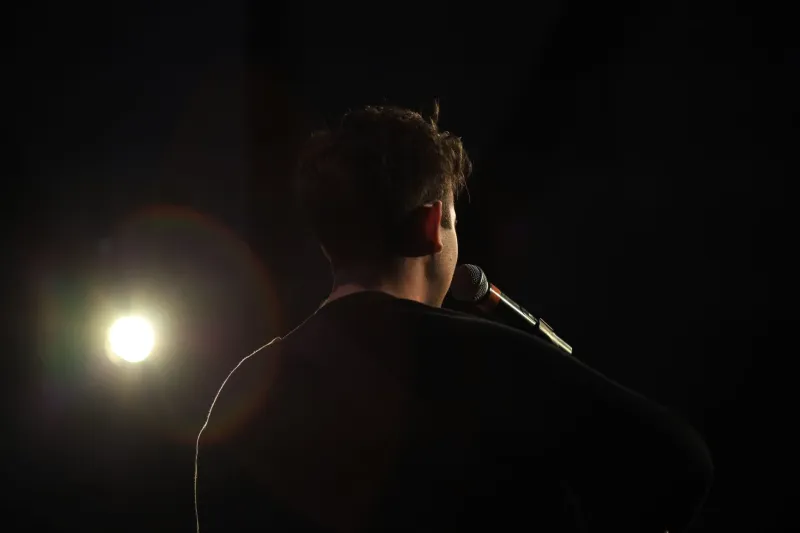
Every serious artist has a chapter they don't love talking about — the open mic chapter. Those Wednesday nights at a bar in some mid-sized American city, performing to a crowd of other performers waiting for their own turn to go up. It can feel like shouting into a void.
But here's what that era actually is: it's your laboratory. You're figuring out what lands, what falls flat, what version of yourself feels true when you're standing in front of strangers with no safety net. The open mic circuit in the US is brutal and unglamorous, but it's also one of the most honest feedback loops an artist can experience. Nobody's clapping out of obligation. If they look up from their drinks, you did something right.
Courtney has talked openly about those early performance years — the awkward sets, the nights when the sound system cut out mid-song, the moments of genuine connection with an audience of maybe twelve people that somehow felt more meaningful than anything else. That intimacy, that rawness, is where artistic identity gets forged.
Rejection Isn't a Sign — It's Part of the Process
Here's something the entertainment industry doesn't advertise: rejection is basically a full-time job before the real work begins. Venues that don't call back. Showcases you audition for three times and never get picked. Managers who say they're interested and then go completely silent.
The American entertainment landscape is enormous and competitive in ways that can feel suffocating. New York, Los Angeles, Nashville, Atlanta — these cities are packed with talented people who want exactly what you want. And the gatekeepers? They're overwhelmed, distracted, and working with limited slots.
 Photo: Los Angeles, via upload.wikimedia.org
What separates the artists who eventually break through from those who don't isn't always raw talent. It's often the ability to absorb rejection without letting it rewrite the story you're telling yourself about who you are. That's easier said than done. But artists who treat every "no" as data rather than verdict tend to find their footing eventually.
Courtney's perspective on this has always been refreshingly grounded — the idea that authenticity is a long game. You don't build a real audience by chasing what's trending. You build it by being so consistently and genuinely yourself that the right people eventually find you.
The Pivot Moments That Actually Matter
Every artist's timeline has a few key inflection points — moments where something shifts, even if it's not immediately obvious. It might be a performance that gets shared unexpectedly. A collaboration that opens a door. A creative decision to stop doing what's expected and start doing what's true.
These pivots rarely look dramatic from the inside. More often, they feel like a quiet decision made in a parking lot after a show, or a conversation with someone who sees something in your work that you'd almost stopped believing in yourself. The entertainment industry loves a good origin story, but the real origin stories are usually smaller and stranger than the polished versions.
For emerging artists navigating the US market right now, the landscape has shifted considerably. Platforms like TikTok, Instagram, and YouTube have created new pathways that didn't exist ten years ago — but they've also created new pressures and new ways to feel like you're falling behind. The artists who seem to handle it best are the ones who use those platforms as extensions of their authentic voice rather than as performance stages where they're playing a character they think the algorithm wants.
Building Community Before Building a Career
One thing that often gets overlooked in conversations about "making it" is the role of community. The artists, musicians, writers, and performers who tend to sustain careers in American entertainment aren't just talented — they're connected. Not in a networking-event, business-card kind of way. In a genuine, show-up-for-each-other, creative-ecosystem kind of way.
The friendships built during those early struggling years often become the professional relationships that matter most later on. The photographer who shot your first promo photos for almost nothing. The venue booker who gave you a slot before you'd earned it. The fellow artist who put you on their bill because they believed in what you were doing.
Courtney Illfield's creative world is a good example of this — the way collaboration and community run through the work isn't incidental. It's structural. Art that's made in isolation tends to feel like it, and audiences can sense the difference.
What Authenticity Actually Costs
There's a reason "where art meets authenticity" isn't just a tagline — it's a real tension that every artist navigates. Being authentic in a commercial landscape means making choices that don't always make financial sense in the short term. It means turning down opportunities that don't fit. It means being willing to have a smaller audience that actually connects with your work over a larger one that's indifferent to it.
That's a hard thing to commit to when you're still building. But the artists who've managed to create something lasting — who've moved from open mics to main stages without losing the thing that made them interesting in the first place — tend to be the ones who held onto that commitment even when it was inconvenient.
The grind is real. The rejection is real. The late nights and the self-doubt and the moments where you genuinely don't know if it's going to work out — all of it is real. But so is the other side of it. The moment when the work starts to find its people. When the room is full and the energy is undeniable and everything you put into it starts to make a certain kind of sense.
That's what the journey toward authenticity actually looks like. Not glamorous. Not linear. But completely, unmistakably worth it.