Shedding Skins: The Messy, Honest Truth About Growing Into Your Next Creative Self
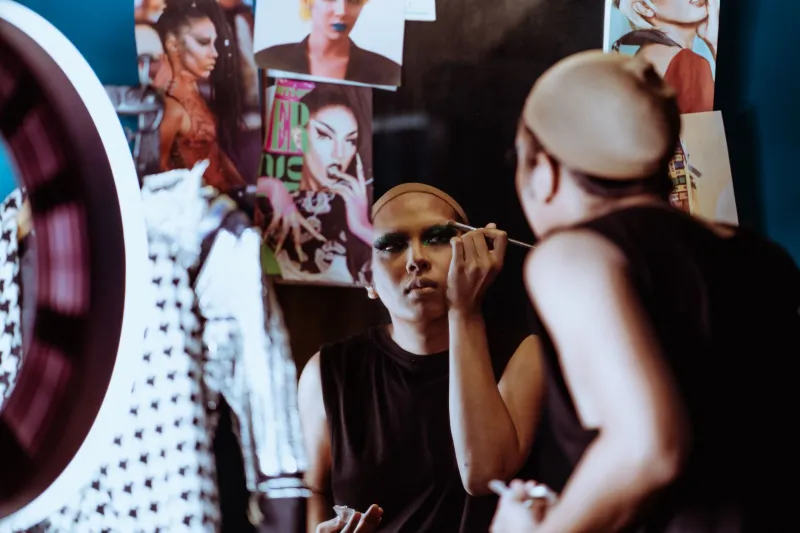
There's a version of reinvention that gets sold to us constantly — the dramatic pivot, the bold rebrand, the phoenix-from-the-ashes narrative that makes for a great press release. And then there's the real thing. The quieter, stranger, sometimes uncomfortable process of realizing that the person you've been performing as has started to feel like a costume that doesn't quite fit anymore.
For Courtney Illfield, that feeling has shown up more than once. And each time, she's had to make a choice: keep wearing the old version because it's familiar, or do the harder thing and figure out what comes next.
The Moment You Start to Feel the Seams
It rarely announces itself with a thunderclap. Most artists who've been through a genuine creative shift will tell you the same thing — it starts as a low hum of restlessness. Something feels slightly off. The work that used to energize you starts to feel like going through the motions. You're still doing it well, maybe even better than ever technically, but the spark is somewhere else.
Courtney has talked about this kind of crossroads in terms of what she calls "performing behind glass" — when there's a pane of invisible distance between what you're putting out into the world and what's actually alive inside you. That gap, she'll tell you, is the signal. Not a sign that you've failed, but a sign that you've grown past the current container.
The American entertainment landscape doesn't always make space for that kind of nuance. There's enormous pressure to stay consistent, to be the thing your audience already knows how to categorize. But the artists who last — the ones who build careers that span decades rather than just a few good years — are the ones who learn to read that restlessness as information rather than a problem to suppress.
Reinvention Isn't Erasure
Here's the part that doesn't get said enough: changing doesn't mean starting from scratch. It doesn't mean disowning your earlier work or pretending the old version of you never existed. That's not reinvention — that's avoidance dressed up in new clothes.
What Courtney has found, through her own creative evolution, is that every shift she's made has actually been built on top of what came before. The rawness that defined her earliest work didn't disappear when her aesthetic matured. It went underground, became structural, started showing up in subtler ways. The emotional directness she was known for didn't vanish — it got more precise.
Think about some of the most enduring American artists across any discipline. They change, sometimes dramatically, but you can always trace the thread. There's a throughline. Toni Morrison's voice evolved across decades of writing, but the core moral seriousness never wavered. David Bowie reinvented his image so many times it became its own mythology, but the theatrical fearlessness was constant. The reinvention was never a betrayal — it was a deepening.
That's the distinction worth holding onto. Growth that deepens your core truth is something entirely different from growth that abandons it.
The Fear That Lives in the Middle
Let's be honest about what the in-between actually feels like, because the highlight reel version skips right over it.
When you're in the middle of becoming something new, you're often not sure what you're becoming. You've let go of the old thing — or at least loosened your grip on it — but the new thing isn't fully formed yet. That liminal space is uncomfortable in a way that's hard to articulate. You're not who you were, but you're not yet who you're heading toward.
Courtney has described this phase as feeling like "standing in a room with the lights off, knowing there's furniture somewhere, just not sure where." You're navigating by feel. And the instinct, especially when external pressure is involved — from audiences, from industry expectations, from your own inner critic — is to snap the lights back on and go back to what you know.
The artists who push through that discomfort aren't braver than everyone else. They've just learned to trust the dark a little more. They've done it before and come out the other side with something real.
What Authenticity Actually Demands
Authenticity gets talked about like it's a fixed point — like you find it once and then protect it forever. But Courtney's experience suggests something more dynamic than that. Staying authentic to yourself over a long creative life means staying willing to be honest about who you're becoming, not just who you've been.
That's a harder ask. It means being willing to make work that your current audience might not immediately understand. It means accepting that some people will prefer the earlier version of you, and that's okay. It means resisting the temptation to perform a version of your old self just because it's safer.
The creative choices that have defined Courtney's evolution haven't always been the obvious ones. Sometimes it's been a shift in subject matter. Sometimes it's been a change in the emotional register she's working in, or the collaborators she's choosing to surround herself with. None of it has been arbitrary. Each choice has been deliberate — rooted in an honest assessment of where she is versus where the work wants to go.
What This Looks Like Going Forward
If you've followed Courtney Illfield's work for any stretch of time, you've probably already noticed that she doesn't stay still for long. Not in a scattered way — she's not chasing trends or reacting to what's performing well on social media. It's more intentional than that. There's a curiosity that drives her, a genuine interest in what she hasn't figured out yet.
That's what reinvention looks like when it's done right. Not a performance of change, but a genuine willingness to keep asking the harder questions. Who am I now? What does the work need that I haven't given it yet? What am I holding onto out of comfort versus what actually still serves the art?
Those aren't easy questions to sit with. But they're the ones that keep the work alive — and keep the artist alive inside the work.
The most authentic thing any performer can do isn't to stay the same. It's to keep showing up honestly for whoever they're becoming next.