What Your 2AM Queue Is Really Trying to Tell You
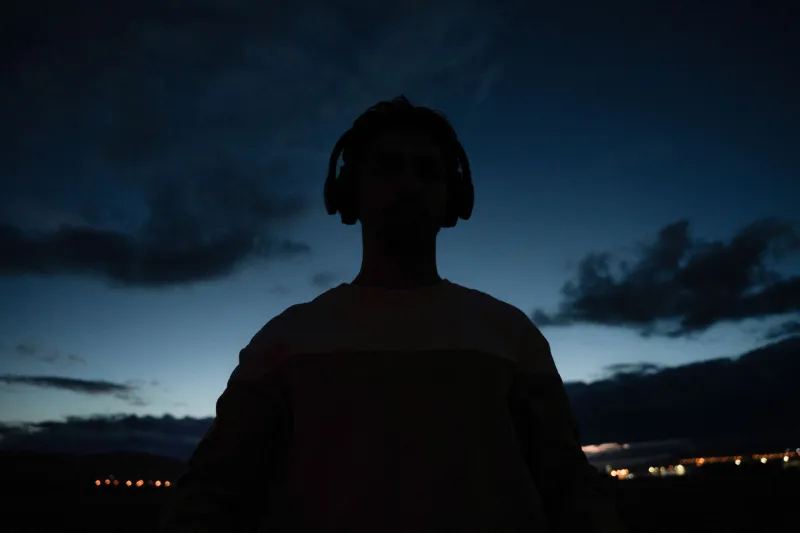
There's a version of you that nobody sees. The one who puts on headphones after midnight, pulls up something raw and specific, and just... sits with it. No audience. No algorithm to impress. Just you and whatever song currently feels like a hand pressed flat against your chest.
That version of you is doing something important. And most of us never stop to ask what.
The Playlist Nobody Sees
Here's a thing that doesn't get talked about enough in conversations about creative identity: the music you consume privately is wildly different from the music you share. Your public Spotify profile, your Instagram stories, the stuff you throw on at a dinner party — that's a curated version. A highlight reel. The private queue, the one that runs on shuffle at 1:47am when you can't sleep and your brain won't quit? That's the unedited draft.
Courtney has talked before about keeping a kind of mental catalog of those late-night listens. Not in a precious, journaling-about-it way — more like noticing patterns. When you're circling back to the same Fiona Apple record for three weeks straight, that's not just a mood. That's a signal. Something in you is drawn to that particular kind of emotional precision, that specific texture of controlled chaos, and it's worth paying attention to why.
The songs we play alone are the ones we're not ready to explain yet.
Music as a Compass, Not a Soundtrack
Most people treat music like wallpaper — something to fill silence, to match a vibe, to make the commute bearable. And that's fine. But for artists and performers, there's another layer to it. Music you absorb in solitude doesn't just accompany your current emotional state. It points somewhere. It's pulling you toward a creative territory you haven't fully entered yet.
Think about it this way: if you keep gravitating toward albums that feel sparse and confessional — late-night folk, spoken word, stripped-down bedroom pop — your creative instincts are probably telling you to strip something back. To get quieter and more precise. Alternatively, if you've been obsessively replaying dense, layered production — big cinematic scores, maximalist R&B, chaotic punk — something in you is building toward something louder, more ambitious, more willing to take up space.
Your ears are running ahead of your hands. The listening is the preview.
Reading the Patterns
So how do you actually audit this? Start simple. For the next two weeks, pay attention to what you reach for when nobody's watching. Not what you think you should be listening to. Not what's on every editorial playlist right now. What you actually, genuinely, compulsively return to.
A few things to notice:
The era. Are you consistently going back to music from a specific decade or moment in history? That's often a clue about what emotional register you're living in — or trying to access. Nostalgia has creative information in it. It's not always about the past; sometimes it's about a feeling you want to recreate in the present.
The lyrics versus the sound. Are you listening to what is being said, or are you drowning in texture and tone? When the words matter more, you're probably working through something specific — a story you're trying to articulate. When it's all about the sonic landscape, you might be in a more intuitive, less verbal creative space.
The repetition. One play is a mood. Ten plays is an obsession. An obsession is a direction.
The artists you're embarrassed to admit you love right now. Those are almost always the most important ones. The ones that feel too earnest, too niche, too uncool for public consumption — those are the ones doing real work on you.
What Courtney's Late-Night Listening Looks Like
Without getting too precious about it, there's something honest about admitting that the music that shapes the work isn't always the music that looks good on a profile. For Courtney, there are albums that have been on permanent rotation during creative stretches — records that never made it to a shared playlist but quietly informed everything from lyrical choices to performance energy to the specific emotional temperature of a room.
There's a certain kind of American singer-songwriter tradition — think the kind of records that feel like they were made in a kitchen at 3am — that keeps showing up as a reference point. Not because it's trendy, but because something in that rawness keeps feeling like the right frequency. Like tuning into a station that actually says something true.
That's the thing about private listening. It doesn't care about relevance. It just keeps pointing you back toward what's real.
Emotional Forecasting
Here's the reframe that might actually change how you think about your listening habits: treat your late-night queue like a weather report for your creative future.
The music you're consuming right now is previewing the art you're about to make — or the art you need to make. It's your subconscious doing homework before your conscious mind gets the memo. When you pay attention to it, you start to see patterns that feel almost predictive. The six-month stretch of melancholy, cinematic music that preceded a major shift in how you approach your craft. The sudden obsession with call-and-response structures that showed up right before you started thinking differently about performance dynamics.
Your ears know before you know.
The Invitation
So here's the challenge: this week, instead of shuffling past your late-night habits without a second thought, actually sit with them. Ask yourself what you keep returning to, and then ask why. Not in an overthinking way. Just with a little curiosity.
Because the story you haven't written yet — the performance you haven't given, the creative chapter you're standing just outside of — is probably already humming somewhere in your headphones. You just have to be willing to listen to what it's actually saying.
And maybe, just maybe, stop skipping the song you keep skipping right before it gets to the part that makes you feel too much.
That part is the whole point.