When the Lights Flicker and the Magic Begins: What Unscripted Moments Teach Us About Real Performance
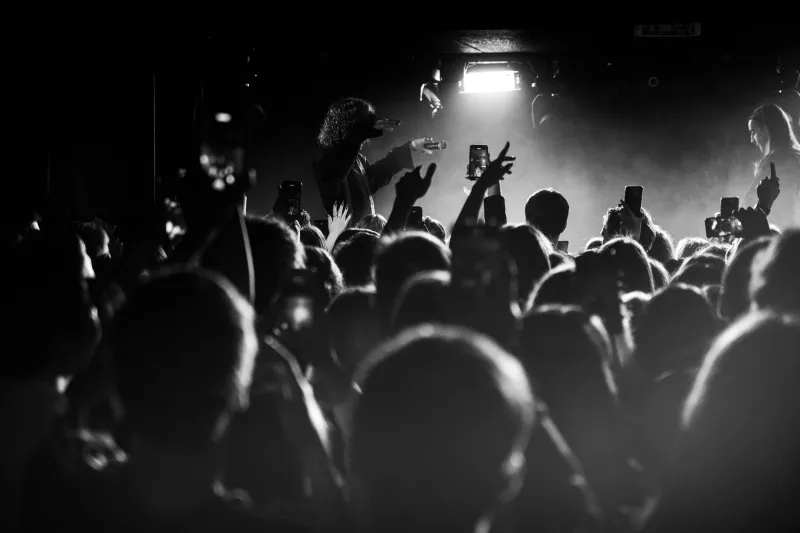
There's a version of every live show that exists only in a performer's head — the ideal run, the flawless execution, every note landing exactly where it should. Rehearsal after rehearsal is spent chasing that version. And then the lights go up, and real life walks onto the stage uninvited.
A string snaps. The monitor cuts out. Someone in the third row shouts something so perfectly timed it rewrites the whole energy of the room. The teleprompter freezes. The fog machine fires too early. Whatever it is, something happens — and in that exact moment, the show stops being a performance and starts being an experience.
That's where the real art lives.
The Rehearsed Version Is Never the One People Talk About
Ask anyone who's been to a truly unforgettable concert what they remember most. Nine times out of ten, it's not the song that went exactly according to plan. It's the moment the artist stopped mid-verse and laughed at themselves. It's the power outage that turned into a stripped-down acoustic set by phone flashlight. It's the breakdown that cracked a performer open in front of ten thousand strangers.
Think about what happened at Woodstock '69 when the stage nearly collapsed under the weight of the crowd. Or the countless times Bruce Springsteen has turned a technical malfunction into a three-minute conversation with the front row that the entire arena ends up hanging on. Springsteen, in particular, has built an almost mythological reputation not just on his catalog but on his willingness to let the show breathe — to follow the room wherever it wants to go.
Or consider the famous 1971 Fillmore East recordings of the Allman Brothers Band. That music lives the way it does because you can feel the room in it. You can hear the give-and-take between musicians who are listening to each other, not just executing a plan. The chaos is baked right in, and it's exactly what makes those recordings timeless.
Why Imperfection Cuts Deeper Than Polish
There's a psychological reason audiences connect harder to the unscripted stuff, and it's not complicated: it's real. When something goes wrong and a performer handles it — or doesn't handle it gracefully, but handles it honestly — the audience stops watching a show and starts witnessing a person.
That shift is everything.
We live in an era of hyper-produced content. Streaming platforms serve up flawless audio. Music videos are color-graded within an inch of their lives. Social media feeds are curated to the point of fiction. So when a performer stands in front of a live crowd and something human happens — something unfiltered and unplanned — it cuts right through all that noise. It reminds everyone in the room why they left the house in the first place.
Authenticity isn't a buzzword. It's the whole point. Audiences don't pay to see a perfect replica of a record. They pay to be in the room when something happens.
The Performers Who've Mastered the Art of the Pivot
Some artists seem almost allergic to the unscripted moment — you can see them tighten up when something goes sideways, rushing to get back to the safety of the setlist. And then there are performers who seem to come alive the second the plan falls apart.
Dave Chappelle built an entire performance philosophy around this. His stand-up sets are famously fluid, shaped by the specific energy of each room on each night. He's talked openly about how crowd interaction — real, unscripted, sometimes uncomfortable crowd interaction — is where his best material actually gets born. The bit that ends up on a Netflix special started as something that happened to him on stage, not something he wrote at a desk.
In the music world, Beyoncé's 2013 Super Bowl halftime show is often held up as a pinnacle of precision — and it was. But some of her most talked-about moments have come from the opposite: the times on tour when she's stopped a song to talk to a fan in the front row, or ad-libbed a vocal run that wasn't in any version of the rehearsal. Those clips go viral every time. The choreography is impressive. The humanity is unforgettable.
Learning to Lean Into the Chaos
For any performer — whether you're playing arenas or open mics — the instinct when something goes wrong is to panic and course-correct as fast as possible. That instinct makes sense. You've worked hard. You have a plan. Deviating from it feels like failure.
But here's the reframe: the audience doesn't know your plan. They only know what's happening in front of them right now. And if what's happening right now is a performer who's present, adaptable, and genuinely in the moment — even because something broke or misfired — that's not failure. That's the show.
The skill isn't avoiding the chaos. It's developing enough confidence and presence to meet it without flinching. That comes from knowing your material so deeply that you're not dependent on the script. It comes from trusting your instincts. And honestly? It comes from failing publicly enough times that it stops being the thing you're most afraid of.
Every performer who's ever turned a disaster into a defining moment got there by surviving smaller disasters first.
What the Crowd Actually Came For
Here's the truth about live performance that no production budget can manufacture: the audience wants to feel something they couldn't have felt anywhere else. They want the version of this show that only exists tonight, in this room, with these people around them.
The scripted parts get them through the door. The unscripted parts are why they stay.
When a performer drops a lyric and the crowd fills it in, that's not a mistake — that's communion. When a guitar string snaps and the artist jokes about it and keeps going, that's not an interruption — that's a story the audience gets to tell for the rest of their lives. I was there the night that happened.
That's the encore nobody planned. And more often than not, it's the one everyone remembers.
The best performers aren't the ones who never let anything go wrong. They're the ones who've learned that sometimes, the thing going wrong is the performance. They've stopped treating spontaneity as the enemy of excellence and started treating it as the whole point.
Leaning into that — really leaning in, without the safety net of a perfectly rehearsed response — is one of the hardest and most rewarding things any artist can learn to do. It's also, not coincidentally, what separates the performers we remember from the ones we forget.