Stillness Is a Strategy: What Happens When Artists Choose to Stop Before They Break
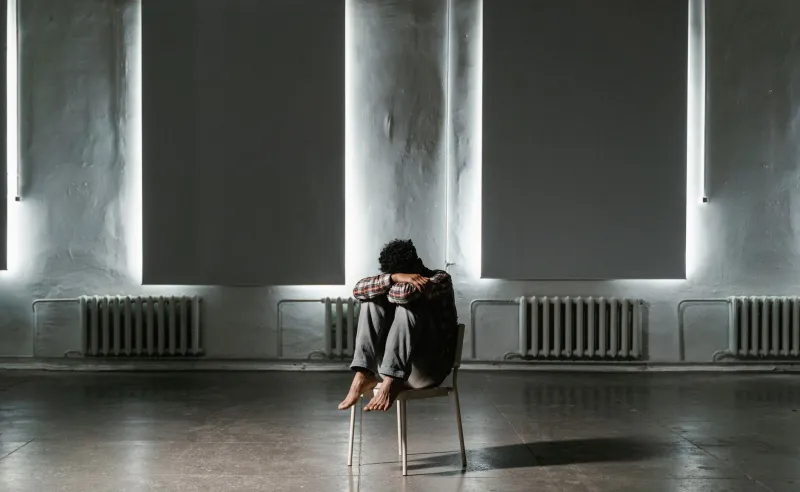
There's a particular kind of exhaustion that doesn't show up on your face right away. It lives somewhere deeper — in the work itself. Songs that feel hollow. Performances that technically land but emotionally miss. Canvases that look finished but somehow aren't. If you've been there, you already know what we're talking about. And if you haven't hit that wall yet, you probably will.
Here's the thing nobody in this industry wants to say out loud: sometimes the most powerful move you can make is to stop.
Not quit. Not drift. Stop. Intentionally. On purpose. With full awareness that the pause is part of the process.
The Hustle Myth and What It's Actually Costing You
American creative culture has a complicated relationship with rest. We celebrate the grind. We repost the 4AM studio sessions. We mythologize the artist who never sleeps, never slows down, never takes a day off. And sure, there's something genuinely admirable about that kind of dedication — but there's also something quietly destructive about it.
When output becomes the only measure of worth, the work starts to suffer. Not immediately. Not in ways that are obvious at first. But slowly, the voice that made your art yours starts to blur. You're producing, but you're not creating. There's a difference, and most artists feel it long before they admit it.
The hustle narrative doesn't leave much room for that conversation. So a lot of artists keep pushing past the point where pushing actually helps — and they wonder why the work feels like it's circling the drain.
What the Greats Actually Did
Look closely at some of the most respected names in music, film, and performance, and you'll find something interesting: the pauses are part of the story.
Adele famously stepped away from the spotlight between albums for stretches that had fans and press wondering what was going on. What came back was 25 and then 30 — records that felt more emotionally raw and fully realized than almost anything her peers were releasing. She didn't disappear because she ran out of ideas. She disappeared so the ideas could actually mean something again.
Dave Chappelle's mid-career walkaway from one of the most lucrative deals in comedy history is one of the most talked-about pauses in entertainment. He left Chappelle's Show at its peak — not because the money wasn't right, but because something inside the work had gone sideways. What followed was years of smaller rooms, quieter stages, and a slow rebuild of creative authenticity that eventually brought him back stronger and more himself than ever.
Even Beyoncé — arguably one of the hardest-working performers alive — has spoken about the importance of pulling back to reconnect with what she actually wants to say before she says it publicly. The silence before Lemonade wasn't absence. It was preparation.
These aren't cautionary tales about burnout. They're blueprints for sustainability.
Silence Is Not the Opposite of Progress
Here's a reframe worth sitting with: rest is not the absence of work. It's a different kind of work.
When you step away from the output — from the posting, the performing, the producing — your brain doesn't go offline. It processes. It sorts. It makes connections that it couldn't make when it was too busy executing to reflect. Psychologists call this the default mode network, and it's most active when we're not actively focused on a task. Some researchers believe it's where our most creative thinking actually happens.
In other words, the shower thoughts, the half-asleep ideas, the random inspiration that hits on a walk — that's not distraction. That's your brain doing its best work. And you only get access to it when you give yourself permission to slow down.
For artists, this matters enormously. The voice that makes your work distinct isn't something you can force. It has to surface. And it surfaces in the quiet.
How to Make the Pause Intentional (Instead of Just Collapsing Into It)
There's a difference between a strategic pause and burning out into a couch. Both involve stopping, but only one of them is useful.
An intentional pause has some structure to it — not a rigid schedule, but a sense of purpose. You're not stepping back because you've given up. You're stepping back because you're serious enough about the work to protect it.
A few things that can make the pause productive rather than passive:
Let yourself consume without creating. Go see live music. Watch films you wouldn't normally watch. Read something completely unrelated to your field. Fill the well back up before you expect it to give anything out.
Get physical. Movement — running, hiking, even just walking without headphones — has a way of shaking loose creative blocks that sitting in front of a screen never will. A lot of artists report that their best ideas come when their body is busy and their mind is free.
Revisit the work that made you fall in love with this in the first place. Not to copy it. Not to compare yourself to it. Just to remember why any of this matters to you. That original why tends to get buried under deadlines and expectations, and sometimes you have to dig back down to find it.
Resist the urge to announce the pause. You don't owe anyone a content calendar. The best resets happen quietly, without the pressure of a comeback narrative already forming around them.
Coming Back Different
The artists who return from intentional stillness rarely come back the same — and that's the whole point.
The pause isn't about preservation. It's about evolution. When you give yourself real space, the version of you that comes back to the work has had time to grow, to grieve things that needed grieving, to get excited about things that hadn't excited you in a while. That's not stalling. That's becoming.
And honestly? Audiences feel it. There's something unmistakable about an artist who returns to the work with renewed conviction versus one who never stopped but slowly hollowed out. The work carries the weight of whatever the artist brought to it — including the weight of having chosen themselves enough to step away when stepping away was what the work needed.
The Most Authentic Move You Can Make
At the end of the day, choosing stillness over performance is one of the most honest things an artist can do. It says: I care more about the integrity of what I make than the appearance of constant productivity. It says: I trust the process enough to let it breathe.
In a creative landscape that rewards visibility above almost everything else, that kind of quiet confidence is genuinely rare. And it's the kind of thing that, over time, separates the artists who last from the ones who burned bright and faded fast.
So if you're feeling the pull to stop — not because you're done, but because something in you knows the work needs it — maybe listen to that. The pause might be exactly where your next beginning is waiting.